
Ze is a Chinese high school student. His attitude toward his family is poles apart from before.
In middle school, the preteen hated it when his parents were around. Every day after school, he wished his folks would still be out by the time he got home. The reason, of course, was that he could play his favourite video game to his heart’s content, were the adults still at work. What about the lessons? “They were easy,” the boy boasted. “I was always good at them then.”
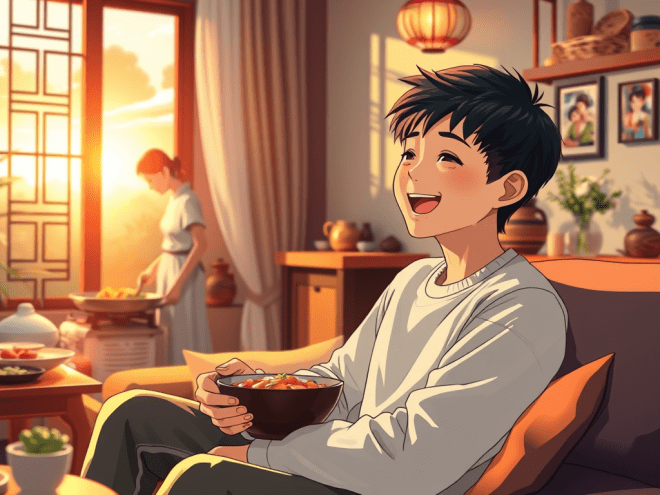
Now, in contrast, an aching void of loneliness will attack the teen if he, upon arrival at home, finds his parents absent. Toward the end of his weekly grind at school, he is dying to see his family and chat with them. The adults’ company comforts and heals the adolescent’s broken soul.
Back at school, once the rat race starts, there is no way he can stop and rest. Deadlines and grades constantly stress him out in the competitive environment. With surveillance cams installed in the classroom, even a moment of doze becomes a luxury. Teachers and supervisors will rouse him if they catch him nodding off in class. Ze is virtually in pieces at the end of a day, feeling mentally and physically exhausted.
Consequently, at home, what he loathed as a middle schooler is now what he relishes, for it replenishes his energies and adds spice to his existence.
The feeling is exquisite while, with his mother cooking in the kitchen, the smell is wafting over into the living room. Perched comfortably on the couch watching TV, Ze feels as if home were heaven. The peak moment happens as the mother is setting the dishes on the dinner table. The aroma and the colours of his mother’s cuisine lighten his mood, convincing the boy that he is living the moment to the full.
“Every cell in my body wakes up, man!” he exclaims, feeling very much alive.
 Shengliver Studio