
Shengliver’s Note: Miss Chengfan spoke to the class one day about her grandad in a mini presentation. Later on, she wrote about him in the journal. You will find her grandad’s experiences so much like what you would see in a classic Chinese film.
The years my grandfather was a little boy, the family was dirt poor. Despite his age, he had to find odd jobs to help put meals on the table. He spent his childhood with hefty responsibilities on his tender shoulders, those responsibilities quite unusual for his peers. However, that kind of life taught him to tackle problems all alone. He thus learnt to be independent.
Everyone hopes to have an easy time in the flowering years of his youth. During my grandad’s young days, unfortunately, he was condemned to a life of austerity. Adversity did not crush him though. Besides doing backbreaking slog on the farm, he had to earn money for schooling. Unluckily, as diligent as he was, he still could not afford the tuition fees. In all, he was able to attend primary school, on and off, for no more than four years.
To seek more knowledge, he often went to some better off neighbours to borrow a book and copy it. In this way he managed to read more. You probably would not believe this: My grandad copied a dictionary in five days. The handwritten thesaurus which resulted from his incredible endeavour still stands in our home as a family heirloom. I cannot but admire my grandad from the bottom of my heart every time my eyes rest upon the hand-crafted book.
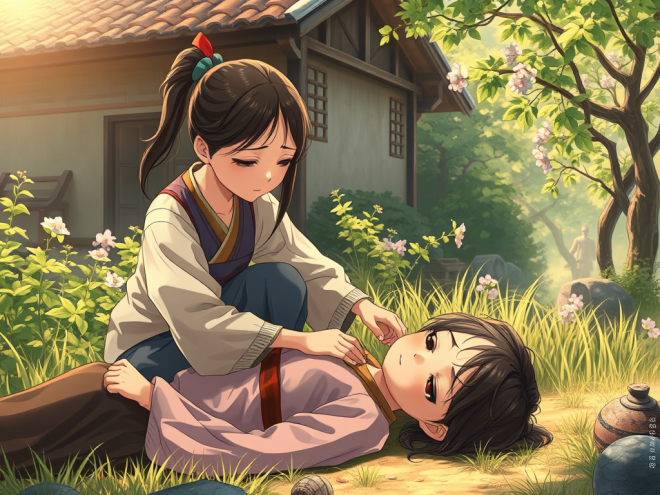
Last century, a lot of the Chinese population starved to death because of failed crops caused by droughts or floods or pests like locusts, as well as as a result of bad governance. One day, my grandfather went out to fell trees in the mountains. Suddenly he collapsed near a cottage. He could have perished then and there but for a lassie who dwelled in the farmhouse. She found my grandad on the hillside unconscious. Out of pity for the young man, she carried him in and cared for him. A little meal she cooked revived my ravenous grandad. Obviously, this country girl saved my grandad. Some time later, the two fell in love. As you can imagine, this angelic woman became my grandma.
Grandad is no longer there. Granny is still with us. When Grandad was still alive, he often encouraged me, “Always do your best, Chengfan. As you sow, so shall you reap.”
I will bear his wisdom in mind and fight on.
 Shengliver Studio