
Shengliver’s Note: The advent of the smartphone, which brings about better privacy and greater independence for the user, has impacted human behaviour more than any other invention. Teens the world over cling to the phone as a weapon in their fight against adults’ control and dominance. Truth is: used right, the smart device makes life easier and more efficient. Misused, it ruins a person’s healthy lifestyle. Temptation and self-discipline combined, the two opposing forces, function like a furnace, which either tempers a user’s character or sees its decay.
Today the smartphone is no novel invention. Bringing a lot of convenience to us, it serves an array of purposes, like shopping, entertainment and, last but not least, learning.
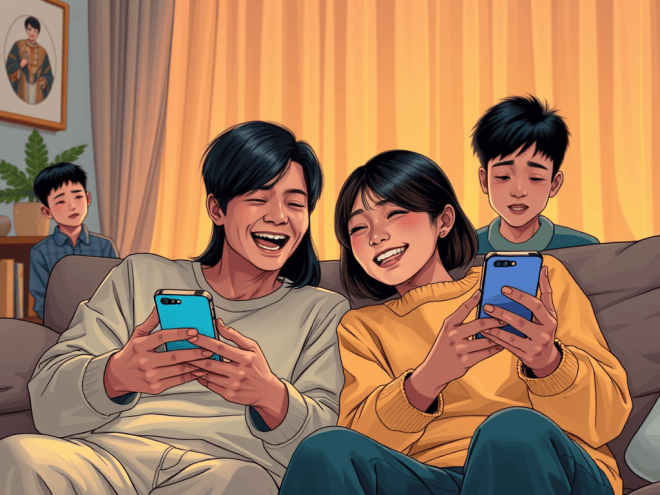
I have a smartphone, but it feels like a time bomb. Anytime I am home using it for whatever purpose, my parents will interfere, accusing me of wasting time gaming. They are always claiming that I will be addicted to the phone and that my grades will be affected by the use of it. I am really pissed off. Thus, a lot of verbal wars have broken out between my parents and me. Their ugly attitude might be reinforced by our teachers, who ban the use of the device among us teens on campus. I do understand the ban, and I have my phone parked at the teacher’s office, Monday through Saturday, while I am at school, so that it does not get in the way of my life as a boarder.
It troubles me a lot. How could I persuade my parents that I do use my phone for learning and that it facilitates my studies and research? They are opposed to my phone use, but they themselves seem to be hooked on their gadgets. Getting home every Saturday evening, I hear hysterical laughter pouring out of their room. Hardcore TikTok addicts, my parents are binge watching their favourite vids on their phones. What hypocrites! I am speechless.
How I wish my parents trusted that I have the ability to use my phone properly! I can prove to them that its use does not conflict with my studies. Not only can the device help me a lot with my lessons but make my life easier and more comfortable as well.

