
Shengliver’s Note: Why does he reside off campus? Why did he meander in the street in the wee small hours? What did he come upon in his wanderings?
Sam Song is doing the last year of high school. I have been his teacher since the second term of Grade One.
By reading his English journal every week, I have formed a clear picture of his family background and his personality. His parents scrape a living, by raising produce in the family vegetable plot and selling it at the marketplace in town. The younger of two children. Sam has got a sister studying at Teachers College. A brooding teen, he does not talk very much, probably because he is aware of the gap between his family financial status and that of his peers, as well as of the parental expectations.
Mother’s Decision
At the beginning of Grade Three, his mother decided to come over and look after him. In the first two years, Sam was a boarder. Dorm life was not bad, but Mrs Song hoped to keep her son company in the challenging last school year.
Initially, Sam begged his mother not to bother. It would not come cheap to rent a room or a house off campus. Rents in the neighbourhood have skyrocketed as growing numbers of students opt to live off campus. However, the mother was adamant. He had to follow her arrangements.
The House
The house the mother rented is next to a construction site, where new blocks of flats are being erected for a real estate project. Tenants around them are mostly peasants turned construction workers. Lodging there brings Sam closer to the working class. The labourers rise early in the morning. Many a night the teen is woken up by them coming back off night shift. The rough folk talk loud and laugh heartily, cursing a lot.
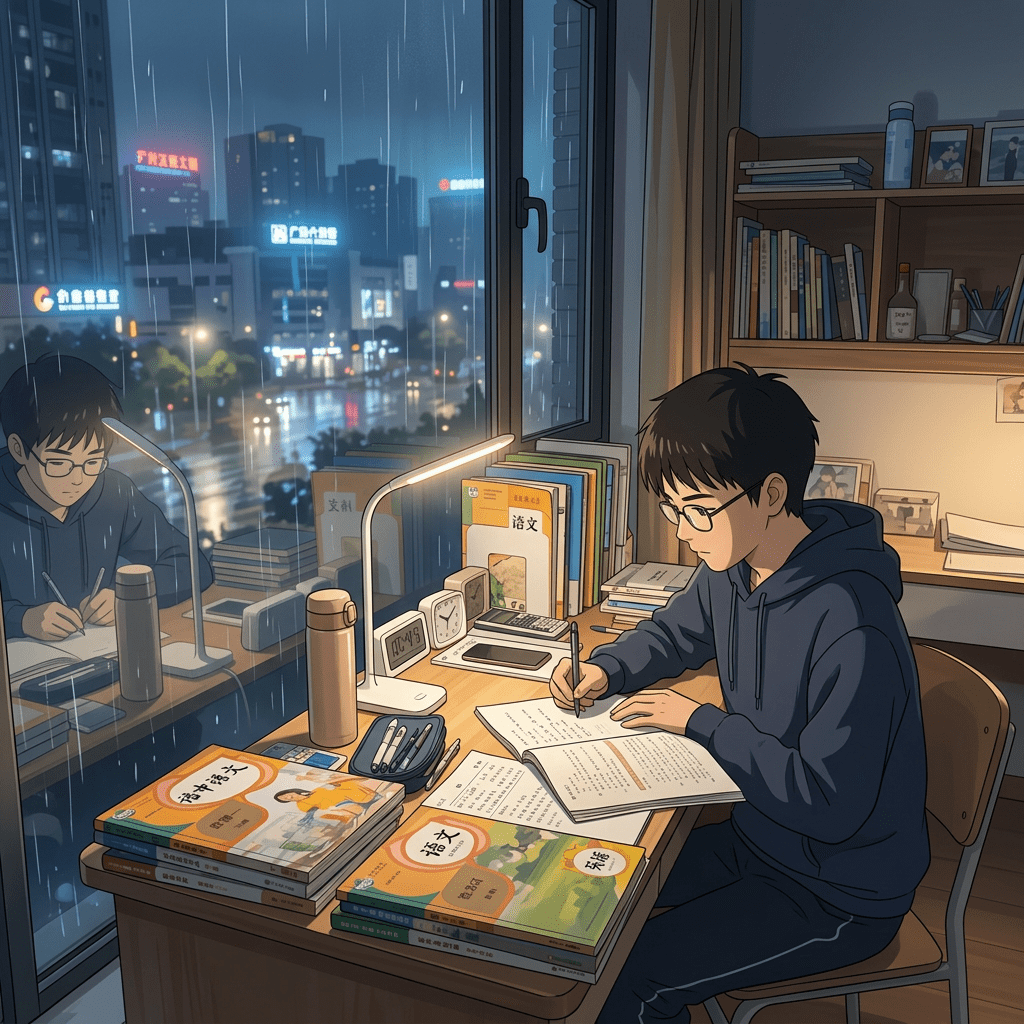
In the winter holidays, the Songs did not go back to their family home in Yunxian. Instead, they spent the Spring Festival in the rented house for Sam’s sake. The last winter holidays for Chinese high school students are a curtailed version — around a week at most if they are lucky. Sam thus did not have to waste time travelling to and from their home in Yunxian.
He had a quality time staying with his family at the lodgings during the festival. The only thing he complained about was the weather. “It was freezing in the house, Shengliver,” Sam wrote in the journal. “I had to be dressed like a bear, even with a stove burning by my side.” His temporary home does not have modern comforts — no TV, no Internet, no heating and no air-conditioning.
Despite the spartan dwelling, the boy enjoys more freedom and better fare there. He eats more leisurely, not having to rush for meals as YYHS boarders do. The school canteen is overstretched by a staggering student population. At mealtimes, it is a scene of crowds, long queues and bedlam. Because the mother cooks exclusively for the son, Sam can afford to do without the unpleasant dining experience at the canteen, thus saving time and energy. Apart from that, after evening classes he can stay up a bit longer. The diligent teen feels awesome, doing his homework deep into the night at the house.
In the dorm back at the school, lights are turned out by a master switch at 10.30, so studying after the curfew there would be impossible without a torch. Besides, the code of conduct bans the practice. Once caught using a torch after 10.30, the violator will be named and shamed, and his class will earn a demerit on Merit and Demerit Board, where the performance and conduct of all classes are logged and ranked on a daily basis. In turn, the culprit will have to face the music if his class director is informed of the deduction.
A Night Walk
Everything seemed to have been running well until I read his journal entry last week. In the entry, the teen shared with me about a walk he took in the small hours the other night. It disturbed me.
Classes over one evening, Sam went back to his lodgings. He was in a rotten mood. What caused it? He did not reveal it.
So depressed did he feel that he sobbed for about 20 minutes, face buried in pillow. His mother and his sister had no clue what had gone wrong, yet they dared not ask. Having given vent to his pressure, he decided to go and walk on the streets for a whole night. The teen exited the house, telling mother and sister that he would not come back for the night.
He dragged his feet out of the house, leaving his family bewildered. No destination in mind, the gloomy teen let his legs carry him anywhere. He wandered like a headless fly for a long time until he could discern a place where he used to take a bus for home. It was a derelict coach station, no longer in service. It dawned on him that he had covered a long distance. The streets were deserted by this hour.
Turning around, the boy started to backtrack. On the way, he came to a little square. No soul was there and most lamps off. The square was littered with torn newspapers and flyers. Sam picked some up, seated himself on a bench, and started browsing through the print in the dim light.
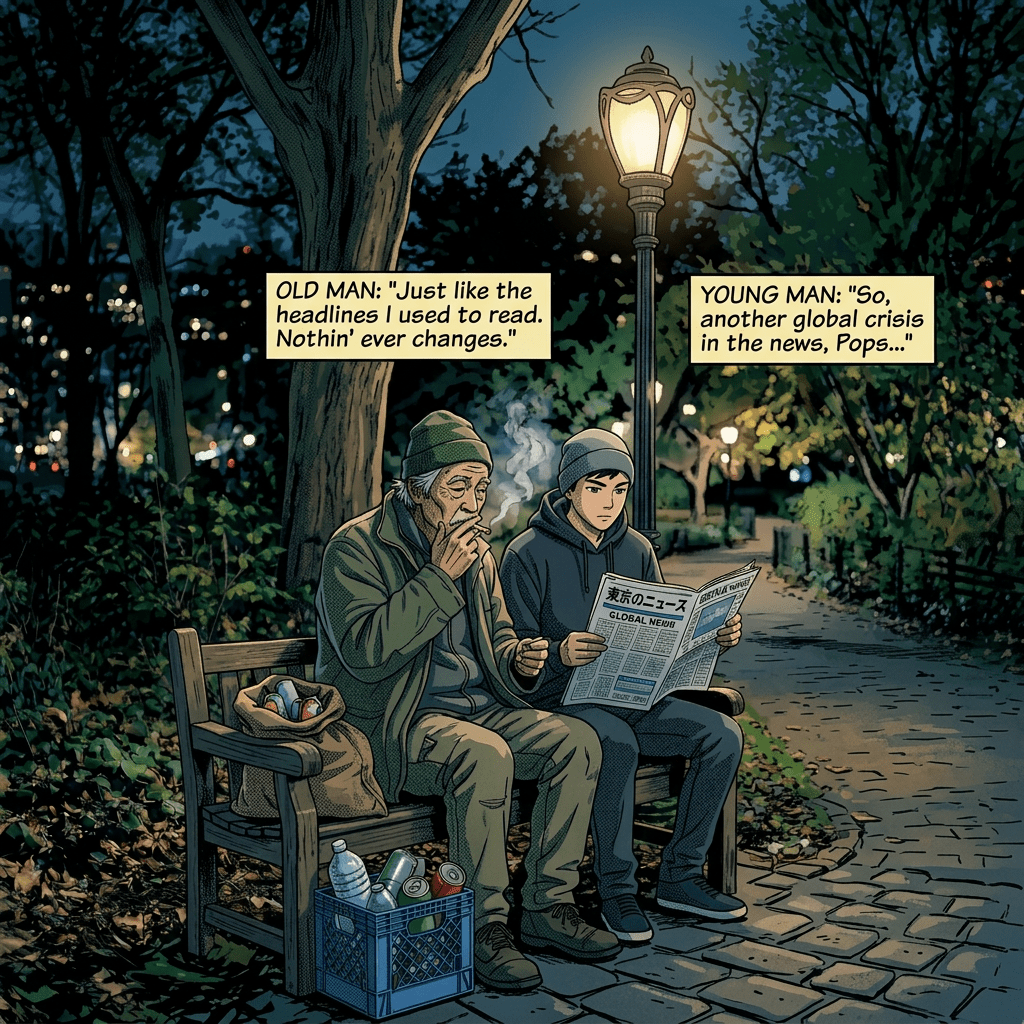
As he was reading, an old fellow turned up. Sam thought he must be a scavenger picking trash like bottles and plastic bags. And he was. He collected odds and ends from the ground and shoved them into a sack he was trailing along.
The chap came over and sat down next to Sam. After a while, he offered the adolescent a cigarette.
“Thanks, sir,” the moody teen responded, “but I do not smoke.”
The old and the young struck up a conversation, with the senior doing most of the talking though. Thinking Sam was a young tramp, the stranger suggested that the boy come and stay the night in his house should he have nowhere to go. Over the years, he said humbly, he has accommodated the homeless this way. Hailing from a hamlet in Tanshan, Yunxian, he is now staying in the regional capital, where his son and daughter-in-law are employed. He still goes back to his roots in the countryside from time to time. With his son standing completely on his own feet, the thrifty father does not need a lot of money, but every night he comes to the square to gather paper, bags and bottles, and then recycles them to augment the family income.
The old man was chatting on. Sam half listened, eyes still on a paper. For the past decade in the square the charitable man has run into several hundred youngsters who slept rough. According to him, most of them opt to wait out bad weather at Internet bars all night long should the elements break loose. He put some of them up in his home at his own expense.
Sam was incredulous. He had thought that the old man and his noble deeds are found only in newscasts or on television shows, but this very night he was with such a character in the flesh in the real world.
The lad indifferent to his offer, the old man added that at the very moment some vagrants were sheltering at his home. If Sam did not believe him, he could take him there for a look. Sam declined the old man’s generosity, explaining that his home is nearby and that he had just come out for a stroll. The encounter had brought about a change of heart in the Chinese teenager.
After the chat, Sam realised that it was time he went back. He was sure that Mother and Sis were still up waiting for him. He arose from the bench, bade the good-willed stranger farewell, and trudged toward his quarters.
When he arrived home, no souls were in, with the lights on. Shortly after he stepped into his bedroom, Mrs Song and Miss Song came in, Mother’s eyes sore and red. It occurred to Sam that he had hurt his family, and remorse crept over the son.
Without further ado, the Songs retired to bed.

