
Hiking is one of the few activities that put me completely at ease, for I am close to nature when I am lost in the wild. I like it because it is casual and I don’t need sophisticated gear for it. A backpack, with a pair of comfortable shoes on, will see me off on a trek.
My family was on an extraordinary hike back in the spring of 2001. A seemingly fun trip turned out to be an adventurous, risky and enlightening affair.
My colleagues, Mr Liu, Mr Zhong, Ms Liang, and Ms Zhang, together with my family of three, set out on the trip. It was organised by my team leader, Mr Liu, with the school authorities’ permission. Every year the staff are entitled to two excursions, one in spring and the other in autumn. Both are financed by the school, transport free of charge.
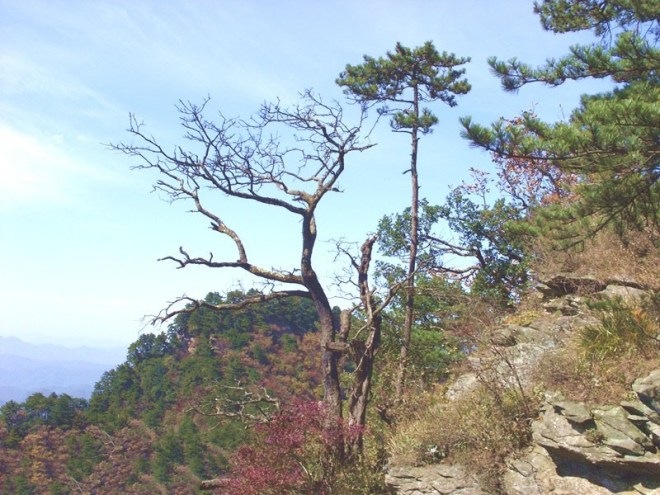
Our destination was a mountain peak called Sai Wudang, located in a suburban district of the city, where thrive virgin forests. The name Sai Wudang literally means “better or higher than Mt Wudang”. Mt Wudang is a world-renowned Taoist summit, which is found in a different suburban district of the city. Legend has it that Sai Wudang is 3.3 chi (a Chinese length unit) taller than the pinnacle of Mt Wudang. Hence the name.
It took us over an hour to travel from downtown to the foot of the mountain by minibus. A small visitor centre was situated at the entrance to the park. The driver wouldn’t join us on the hike. He would rather stay where the bus was parked and walk around. We agreed to come back around 4 p.m.
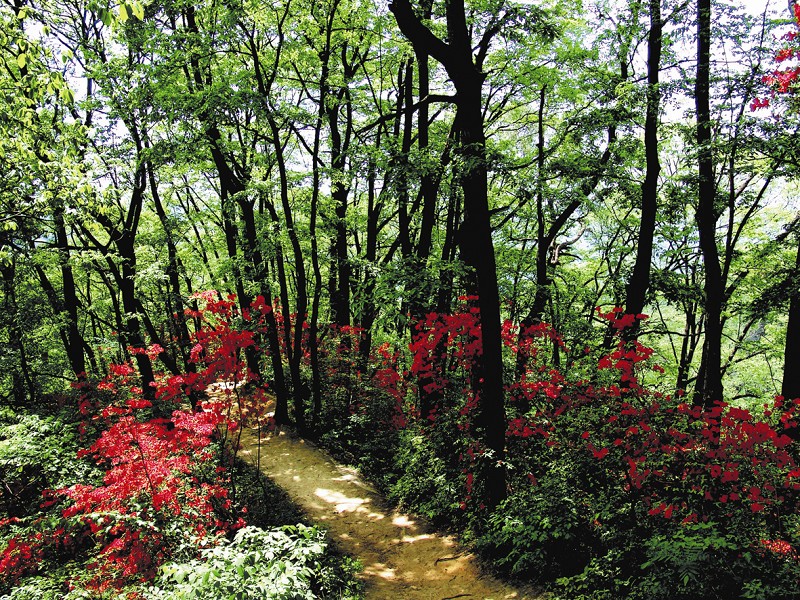
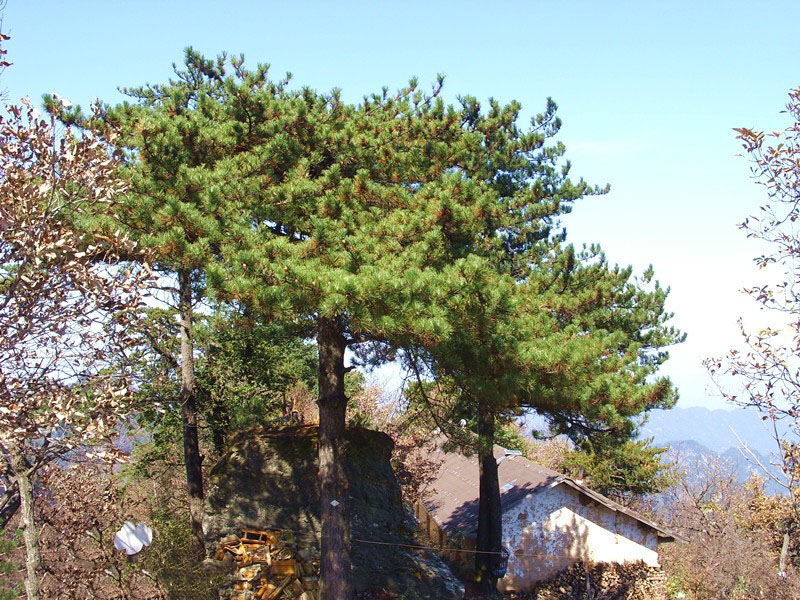
The first leg of the uphill climb was steep but very nice, with refreshing scenery along the way. It was some time after the Labour Day break. Azaleas were still dotting the hillsides where the forests were less dense. There were a lot of peculiar trees here and there. At first sight, three trees were shooting up from the same root; on closer examination, however, the three trees were in fact three trunks of a tree, for they shared one root.
My daughter, Pearl, was about four or five years old then. Excited and curious, she walked with us for long stretches of the journey. Of course, if she got tired, I would give her a piggyback. She enjoyed those rides throughout her childhood. Riding up there on my back, she giggled and chatted with me.
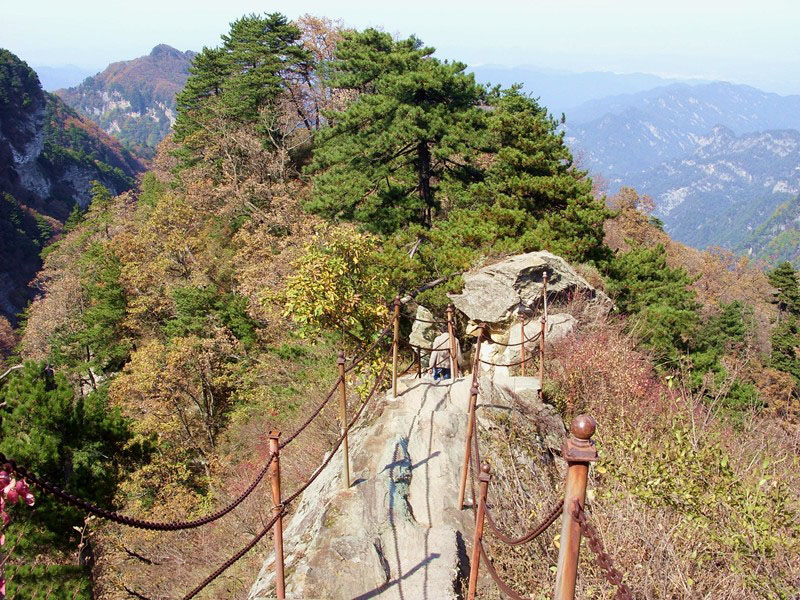
The upward hike was very difficult at two places where the trail was precipitous. The footpath roughly paved with rocks, there were no protective railings or chains on either side for us to hold onto. During the course of the climb, I kept reminding Pearl to cling onto my jacket, for she was still giggling and chattering all along. She was too young to perceive how risky the crawl was. I had to grip the stones with one hand. Meanwhile, I had to balance the chatty girl on the back with the other.
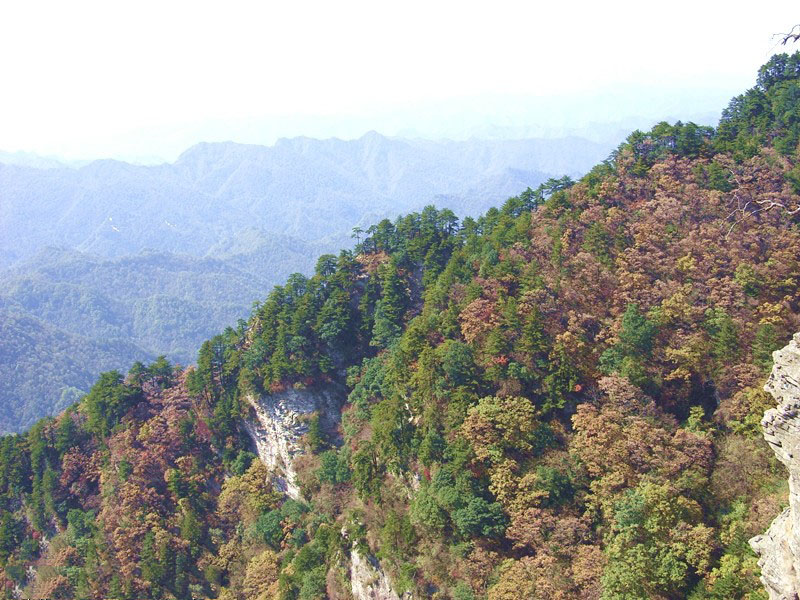
Having beaten the second challenging part of the climb, we came upon a ridge. The altitude is high there, I am sure, for up there the views were breathtaking. With ranges and ranges of mountains running in all directions below us, it was obvious we were standing on the very highest place. Along the top of the ridge, we strolled with ease for about 20 minutes before a crudely constructed place of worship came into view. There a Taoist monk was stationed, tending the burning incense at the shrine.
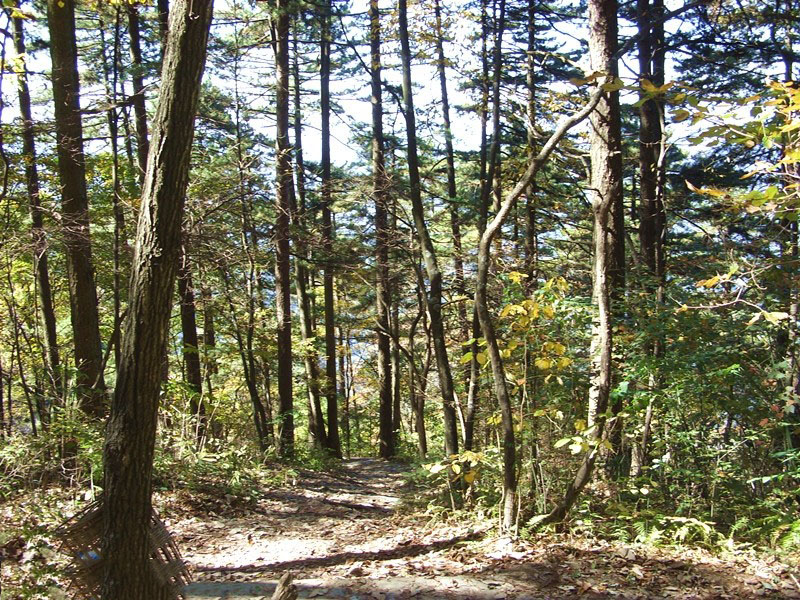
While some of my colleagues were doing some simple Taoist service at the temple, we inquired how to go back to the foot of the mountain. The monk suggested we follow a different trail, down another side of the mountain, where the scenery was different and we definitely would not miss more virgin forests. Some of my colleagues insisted on retracing the way. On thinking of the two difficult parts of the climb, I realised getting down would be riskier. I would still have to carry my daughter down the way. Therefore, I voiced my concern. In the end, the team agreed upon following the recommended path leading back to the starting point, where the driver was supposed to be awaiting.
The monk showed us where the new path started. We resumed our ramble after a short rest at the shrine. Having gone down for about 10 minutes, we came upon a complex of temples nestled in a cove of the mountainside. A place of worship stood in the middle, with a wooden cottage on one side and a stone house on the other.
Some carpenters were crafting furniture for the temple, three or four of them. I stopped over and entered the place. Two Taoist nuns—two aged Chinese ladies—were there. One of my colleagues said a prayer in the temple. We chatted with the carpenters and the two nuns. They all said the path we were following would take us to stunning scenery. One of the carpenters, however, cautioned us that the path down the mountain was rough and that we should take great care.
Time now was probably 2 o’clock in the afternoon. The downhill journey was easy and pleasant, and all the travellers were tired but in a merry mood. We were all expecting to see the visitor centre and our minibus soon, but it seemed a long way. We had already walked downhill for about 2 hours before we realised something was seriously wrong. We saw a valley somewhere in front first, and then a village presented itself.
We proceeded to the cottages full of apprehension. Upon arrival, we surprised the farmers there. They told us we must have taken a wrong turn somewhere down the way. We were actually now in a county called Fangxian, a long way away from the entrance to the park where our minibus was meant to be waiting for us.
It was around 4 pm then. Not a native of my city, our team leader, Mr Liu, was not familiar with ways things were done in the mountains. I found myself asking the villagers this and that. I learned it was over 20 kilometres from the village to the nearest town where we could possibly access any means of transport. The problem was that we would not be able to make it there before dusk. To make matters worse, we were strangers in the area. I asked the villagers what they thought we should do. One young man said that we still had plenty of time to retrace our way up to the temple before dark fell. We could stay the night there with the nuns and the next morning we could find the right path and go back to the entrance where the hiking had started. I thought he was reasonable. After consulting with each other, we adopted this young man’s suggestion. We also asked him to escort us past a cottage somewhere halfway up the path, where a fierce dog had confronted us. The beast had pursued us when we were coming down. The young villager agreed after we promised to pay him 10 yuan for the help.
While we were comparing notes on what to do at the hamlet, I felt some of the team members panicking. My youngest colleague, Ms Liang, was city born, city reared. She was terrified.
I asked all the members to have their drinking bottles refilled with potable water in a villager’s kitchen before our uphill climb. One member, Mr Zhong, complained a lot on the way about having lost our way. I worked the hardest. I had to carry my daughter on my back for the upward endeavour. When I was near exhaustion, I coaxed Pearl into getting off my back and walking on her own for a while. As chirpy as ever, the little girl didn’t have the slightest idea that we could actually be in danger. What was happening excited her like a thriller.
The young villager bade us farewell once he had walked us past the fierce canine. But for his company, the dog would have bitten some of us. Time was flying. Evening was befalling us. I called on everyone to quicken their pace, for we could end up in the open air if we couldn’t make it to the temple near the top of the mountain before complete darkness set in. All the members overstretched, Ms Liang suffered the most. This was the first time she had ever been in such an experience. She was almost worn out.
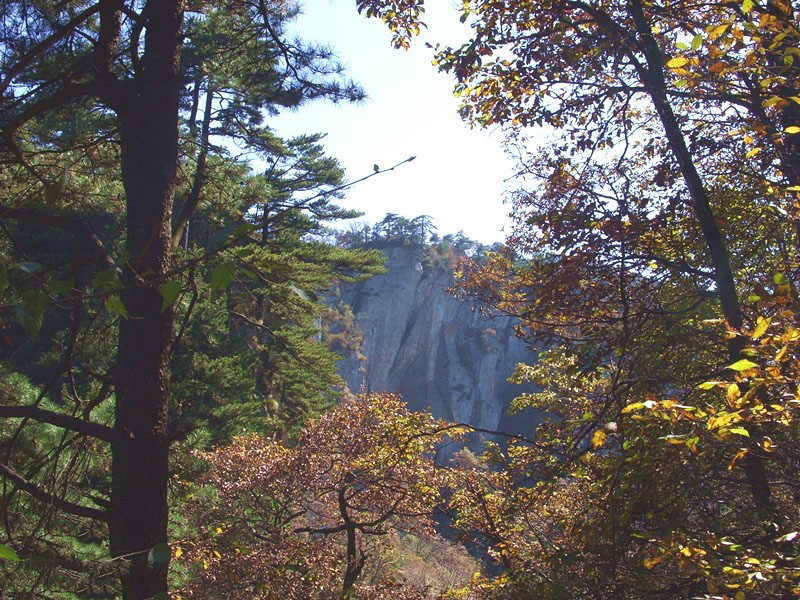
Along the way I found a lot of wild garlic amid the bushes. I told the members this plant was edible. Pungent as it tasted, it might provide energy for my starving body. We had only had some snacks we carried along. Nothing else.
As we were approaching the temple, day was gradually giving way to night. Some thoughts crossed my mind. The worst to come about would be that we couldn’t reach the temple before dark. In that case, we would have to stay the night in the forest, which was certainly home to wildlife. I asked if someone had matches or lighters on them. Luckily someone did. A lighter would help start a campfire. I kept encouraging the members all along. Time was passing like an arrow fleeting. Everyone was horrified of the idea of spending the night in the wild. None of us had done it before. What if wolves or bears should show interest in us? And a child was here with us.
Luckily, by the time we finally made it to the temple, weary and panting, it had not gone completely dark. The carpenters were putting away their saws, hammers and chisels for the night; the nuns were preparing to cook supper.
The instant they saw us, they were shocked, but they guessed what might have happened to us. According to one of the craftsmen, it was not uncommon that hikers had got lost in this part of the park. Some ended up spending their night in the bushes, full of fear. Some, having strayed into the wilderness, had to wait in the woods until searchers pinpointed them. They explained that we must have taken a wrong turn somewhere down the way, where the path branches off in three directions. We should have followed the route on the right, but we had done the middle one. Gosh.
We had supper with the nuns and the carpenters. Each of us got a helping of stir-fried rice followed by some noodles. The evening meal was coarse. The nuns charged each of us only ten yuan for the supper and breakfast for the next morning as well as for a bed to sleep in for the night. It was the first B&B I had ever stayed at, if it qualified as one. Some members didn’t eat much, for they found the food unappetising. Starving, I wolfed down both the stir-fried rice and the noodle soup like a horse. Though cooked with very little oil, they satiated my hunger and thirst.
Seated around a cosy crackling fire in the stone house with the nuns and the carpenters, everyone was relaxed and relieved, especially after Ms Liang confided that one of her classmates in junior high school had slipped off a ledge to death in this very park on a spring outing years before. Fortunately, she had not joined her class on that field trip. What a comfy feeling then! My daughter was intrigued by all this. It certainly was a real-life drama to her.
I asked the two nuns about their life in the temple. It was hard. The meal told everything. They were poorly clothed. Actually, they would have to use all their reserves to provide the supper and breakfast for us. Park administration paid them some money, but it was peanuts. Because it was still undeveloped and inaccessible to the general public, the number of tourists to Sai Wudang was tiny, although the mountain peak charmed hardcore explorers.
Altogether, only four beds were available in the temple complex. Three men had to share one. I had a sound sleep in the primitive bed while my two colleagues moaned and groaned about the hard wooden board.
The next morning everything was plain sailing. We found out why we had made the costly mistake. We had not noticed at all a sign nailed on a tree trunk where the trail trifurcated. It was not our fault, anyway, because the small board with directions on it was in a higher place than normal eyesight could reach. To see it, we would have had to tilt our heads up. Regrettably, none of us did.
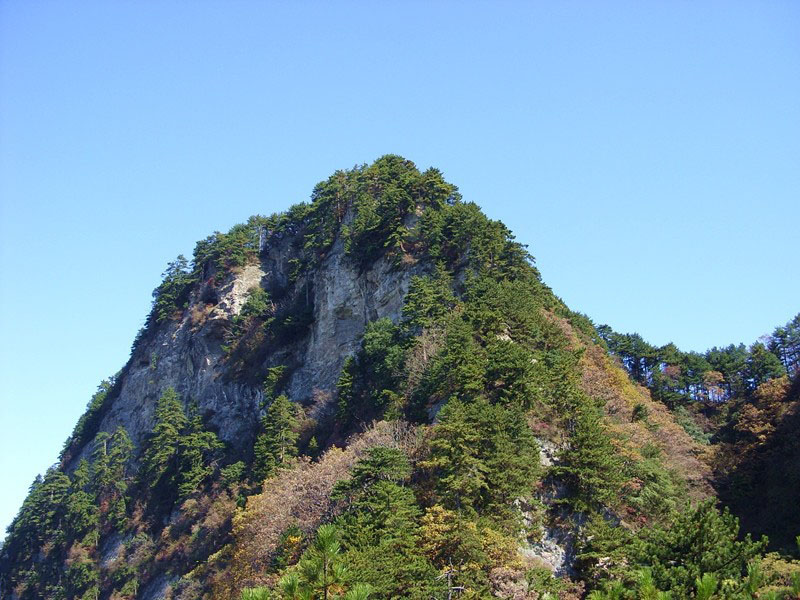
We took the path we had missed the day before, and the hike was resumed. The downward way was rough but rich in postcard scenery. The trail was not maintained at all. Instead, it was beaten by trekkers who had ventured there. The virgin forests were dense and vines everywhere. Some trees, dead from old age, lay where they had fallen, rotten and musty. It was shady and cool all the way, although early May is not a season of the lushest vegetation in our neck of the woods.
When we eventually saw our bus parked at the hotel, our driver jumped with joy. He had had a sleepless night at the visitor centre. The park authorities, after our driver alerted them to our failure to return, had launched a search at daybreak. The search party, who followed the upward track we had done the day before, had not returned by then. They might be wondering whether we had been gobbled up by bears.
Lessons
1. Something that appears safe may turn out to be dangerous if you do not watch out for potential hazards. Walking downhill merrily, none of us guarded against any possible misjudgement.
2. Do not panic in an emergency. Panic backfires. Stay calm and figure out what to do.
3. Do your homework and get information you need. If we had asked the carpenters more questions, we could not have ignored the crucial signpost.
4. Do not travel alone. We felt strong and optimistic as a team.
5. Keep family and friends informed as to where you will be going. Our driver took action though in our case his effort was fruitless. If we had got stuck in the jungle, however, his timely alert would have saved us all, because he was the only source with knowledge of our whereabouts.

